Dating with PTSD can feel very different from “normal” dating. Triggers, trust issues and emotional ups and downs can make mainstream apps feel unsafe or overwhelming. On AbiliMatch, you don’t have to pretend everything is fine or hide the impact that trauma has had on your life.
AbiliMatch.com is one of the newest and fastest-growing disabled dating sites for people with PTSD and other invisible disabilities. It is a truly PTSD-friendly dating space where people understand trauma, respect your boundaries and let you control the pace of every connection.
Designed for trauma survivors, veterans and anyone whose mental health history shapes the way they love, AbiliMatch treats your experiences as a real and important part of who you are. Here, your story is not “too much” or “a problem” — it is something that is listened to, respected and taken seriously.
From the very beginning, AbiliMatch focuses on a safe, judgment-free dating environment, where you can move slowly, be honest about your needs and connect with people who genuinely understand what dating with PTSD is like.
What Is PTSD and How It Shows Up in Everyday Life
PTSD (Post-Traumatic Stress Disorder) is a long-term response to trauma. It can develop after a single event or repeated experiences that overwhelm your sense of safety. People search for what is PTSD because they want to understand why their mind and body still react as if danger is present, even when life appears calm on the outside.
PTSD can follow many types of trauma, such as:
- abuse or violence in childhood or adulthood
- serious accidents, injuries or medical emergencies
- natural disasters or sudden life-threatening events
- the sudden loss of someone important
- combat and deployment, which is why PTSD in veterans is so common
For someone living with PTSD, trauma does not stay in the past. It shows up as PTSD symptoms that affect daily life and relationships. These may include:
- intrusive memories, flashbacks or nightmares
- powerful emotional or physical reactions to triggers
- avoiding people, places or conversations that feel unsafe
- feeling numb, disconnected or “far away” from others
- difficulty sleeping, irritability and being easily startled
- a constant sense of being “on guard” or under threat
These symptoms do not stop just because a person wants to date. A crowded venue can feel overwhelming, a casual question about the past can touch a deep wound, and a small argument can feel like a serious threat. Understanding this is the foundation of good PTSD dating and the reason a trauma-aware platform like AbiliMatch is so important.
Dating with PTSD: Real Challenges and Real Possibilities
Living with PTSD does not mean you cannot have a healthy, loving relationship. It means that the path to connection looks different. When those differences are acknowledged instead of ignored, dating with PTSD can become part of your healing rather than another source of pain.
Trust builds slowly.
Many people with PTSD have been betrayed, abused or left unprotected in moments when they most needed safety. On mainstream apps, there is often pressure to move fast, share a lot and meet quickly. For someone with PTSD, that can feel unsafe. On AbiliMatch, it is normal to build trust gradually through messages, calls and steady communication. Consistency matters more than grand gestures.
Triggers are part of the relationship
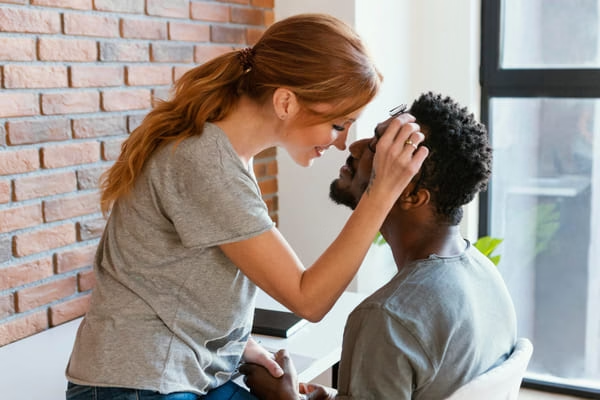
A sound, facial expression, smell or situation may activate old memories and intense feelings. You might go quiet, pull back, feel numb or suddenly need space. In a trauma-informed dating environment, this is not treated as “drama” or “overreacting.” It is understood as a PTSD response that deserves care. The right partner will want to learn what helps you feel grounded again.
Communication has its own rhythm.
PTSD often brings emotional waves. Some days you may feel open and connected, other days flat or distant. This does not necessarily mean you like someone less; it can simply mean your nervous system is tired. A good match learns to read these patterns and respects the need for rest, not constant performance. On AbiliMatch, many members already know what this rhythm feels like in their own lives.
Conflict feels more intense than it looks.
A small disagreement can feel like a major threat when your body associates raised voices or tension with real danger. This is why calm, clear and respectful communication is especially important in PTSD dating. When both people take their time, explain their feelings and avoid unnecessary harshness, conflict becomes something you can move through together instead of something that tears the relationship apart.
Boundaries are not rejection—they are protection.
You may need to say no to certain locations, topics or types of physical contact. You may need more time before meeting in person or sharing your full story. Healthy partners understand that these boundaries are there to protect your mental health and the relationship itself. AbiliMatch encourages this kind of communication instead of shaming it.
At the same time, many people with PTSD bring powerful strengths into relationships. They tend to value honesty, loyalty and emotional depth. They often develop strong empathy from their own experiences of pain. When they feel safe, they can form very deep, committed connections. On a platform where trauma is recognized and respected, PTSD dating becomes a way to find someone who appreciates your strength, not just your scars.
Why AbiliMatch.com Is Different for People with PTSD
AbiliMatch is built for people who want more than generic matches and superficial chat. It is created as a PTSD-friendly dating site within the larger disabled dating space, with specific features that support safety and trust.
A safe, judgment-free dating environment
From the design of the platform to the culture of the community, AbiliMatch centers emotional safety. Talking about therapy, triggers, PTSD disability or mental health is normal and accepted. You are not expected to act as if nothing has happened to you. Your history is part of your life, and AbiliMatch makes space for that.
People understand trauma here — you don’t have to hide anything
Many users live with PTSD themselves, have anxiety or depression, or have supported partners and family members through trauma. When you say you are triggered, dissociating or feeling fragile, you are speaking to people who recognize those experiences in real life. You no longer have to translate or minimize your feelings just to be “dateable.”
Control the pace completely.
On AbiliMatch, you decide how quickly things move. You can keep communication in-app as long as you like, wait before sharing personal details and only meet in person when you truly feel ready. If you need to slow down, you can do so without being judged as “difficult” or “indecisive.” This pacing is especially important for anyone dating with PTSD who needs time to feel physically and emotionally safe.
Strong verification for real safety
AbiliMatch.com offers a verification service so members can prove they are real people. You can even turn on the setting “Only Allow Verified Members to Interact With Me.” When this is active, only verified users can contact you. For people with PTSD—especially those who have experienced manipulation or abuse—this feature reduces the fear of fake profiles and bad intentions and makes the PTSD dating experience feel much more secure.
The largest PTSD support groups in the disabled dating space
AbiliMatch hosts some of the largest support groups for PTSD on a disabled dating site. These groups give you the chance to talk with others who are living and dating with PTSD, share coping strategies, discuss triggers and learn from people at different stages of healing. This combination of social support and dating makes AbiliMatch more than just a PTSD dating site; it becomes a community.
Designed for genuine, long-term relationships
The people who join AbiliMatch are often tired of shallow swiping. They want partners who understand mental health, respect boundaries and are willing to build something stable. This naturally attracts users who are more serious, more patient and better suited to long-term PTSD dating than a typical mainstream app audience.
PTSD, Disability and Anxiety – Quick Clarifications
Many people also search questions like is PTSD a disability or is PTSD an anxiety disorder. It helps to answer them clearly.
Is PTSD a disability?
PTSD can be considered a disability when symptoms seriously interfere with major life activities such as work, relationships and daily functioning. Many veterans and civilians receive a PTSD disability rating in order to access support, treatment and accommodations. Not everyone with PTSD identifies as disabled, but the impact is real and deserves recognition.
Is PTSD an anxiety disorder?
PTSD is now classified as a trauma- and stressor-related disorder, but it has a strong overlap with anxiety. Many people with PTSD experience panic, hypervigilance and high levels of stress, so searches for PTSD dating and dating with anxiety are often closely connected.
What is PTSD in simple terms?
PTSD is a mental health condition that can develop after traumatic events such as abuse, accidents, disasters or combat. It often includes intrusive memories, avoidance, emotional numbness and hyperarousal, all of which can influence how someone feels about dating and relationships.
What about PTSD in veterans?
PTSD in veterans is very common due to combat and deployment-related trauma. Veterans may struggle with crowds, sleep, irritability, guilt and trust. AbiliMatch welcomes veterans and provides a community where their experiences are taken seriously, not dismissed.
Who are some famous people with PTSD?
Several well-known people have spoken publicly about living with PTSD, including Lady Gaga, Prince Harry, Ariana Grande and Medal of Honor recipient Dakota Meyer. Their stories show that PTSD can affect anyone and that it is possible to have a full life and meaningful relationships while dealing with trauma.
How does AbiliMatch help people who are dating with PTSD?
AbiliMatch combines a trauma-aware community, flexible pacing, strong verification and active PTSD support groups. It is built so that people with PTSD can date in a way that feels safe, honest and sustainable.
Can I really find love if I have PTSD?
Yes. PTSD changes the way you experience the world, but it does not remove your ability to love or to be loved. With the right partner and the right environment, dating with PTSD can become a powerful part of your healing journey. AbiliMatch is here to give you that environment.