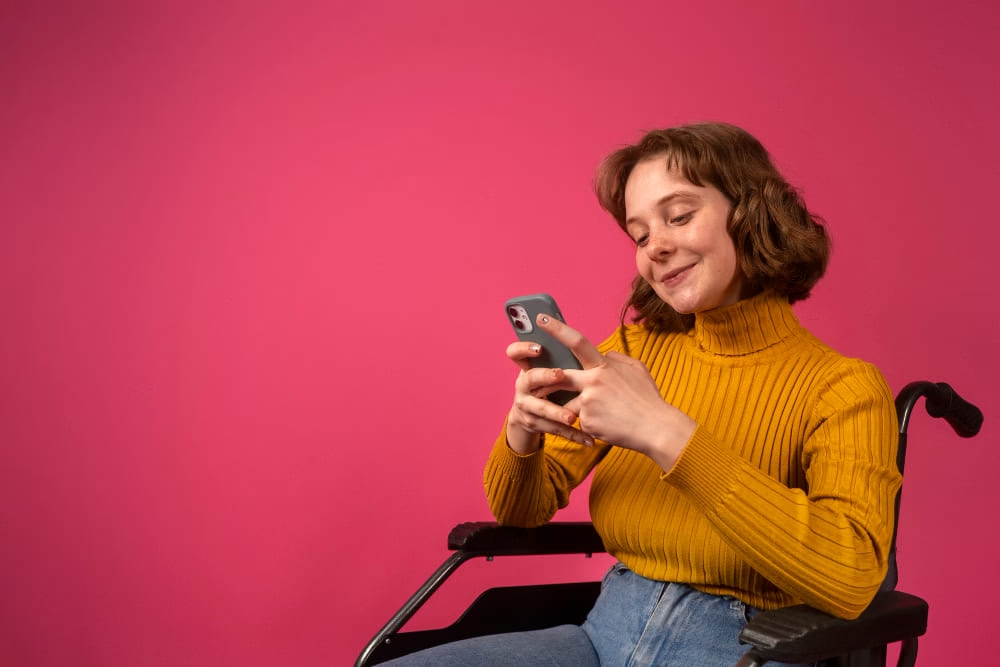
Online dating can be a good way to meet people — but only if the experience feels safe, respectful, and realistic for your life.
If you’re disabled, you may already know the frustrating parts: apps that move too fast, conversations that turn awkward the moment disability comes up, or people who either disappear or ask invasive questions. That doesn’t mean you’re doing it wrong. It usually means the platform and the pace aren’t working for you.
This guide is designed to help you date online with less stress and more control — from choosing the right disability-friendly dating space to building a profile you feel good about, starting conversations, and protecting your safety and confidence.
The Goal: Date Online in a Way That Fits Your Real Life
Takeaway: You don’t need to “date like everyone else.” You need a process that matches your energy, boundaries, and accessibility needs.
Disabled online dating works best when you focus on three things:
- Control: You decide what to share and when.
- Clarity: You communicate in a way that avoids confusion and wasted time.
- Safety: You stay protected emotionally and practically.
Keep these three words in mind. Everything below supports them.
Step 1: Choose a Trusted Disabled Dating Website That Makes Dating Easier
Key idea: For disabled people, the platform is not just a tool — it sets the emotional tone of the entire dating experience.
Many disabled singles try mainstream dating apps first. What often happens is familiar: fast swiping, shallow conversations, and a constant sense that you are expected to “keep up” with an able-bodied dating pace. Over time, this becomes exhausting.
A disability dating website changes that experience in several important ways.
AbiliMatch is designed specifically for disabled singles and people who genuinely respect disability as part of everyday life. This focus makes a real difference from the very first interaction.
Here’s why many disabled people choose AbiliMatch over general dating apps:
- Disability is normalized, not spotlighted.
You don’t have to explain why accessibility matters or worry about shocking someone by mentioning your disability. People join AbiliMatch knowing disability is part of the community. - Profiles encourage real-life context.
Instead of reducing people to photos or swipe decisions, AbiliMatch supports profiles that reflect personality, lifestyle, and communication preferences — which matters when dating with different energy levels or access needs. - Stronger moderation and safer interactions.
Dating sites for people with disabilities tend to take safety more seriously. AbiliMatch emphasizes respectful behavior, reporting tools, and community standards that help reduce fetishization, harassment, and scams. - A slower, more intentional dating pace.
Many disabled singles prefer conversation before pressure. AbiliMatch supports messaging-first connections, making it easier to build trust before meeting.
Choosing the right platform doesn’t guarantee a perfect match — but it removes unnecessary obstacles. For many disabled people, AbiliMatch feels less like “trying to fit into dating” and more like dating that fits real life.
Step 2: Build a Profile That Feels Like You
Takeaway: A good profile doesn’t hide reality — it frames it with calm confidence.
A common trap is trying to “prove” you’re easy to date. That usually backfires, because it attracts people who want you to be convenient rather than understood.
Instead, aim for a profile that does two jobs:
- shows your personality
- sets expectations gently
What to write when dating with a disability?
1–2 lines about your vibe + 1–2 lines about your life rhythm + 1 line about what you want
Example (chronic illness / fatigue):
I’m a calm, funny person who loves movies, good food, and deep conversations.
I live with a chronic condition, so I’m more into relaxed plans than nonstop activity.
I’m here for a real connection with someone kind and emotionally steady.
Example (wheelchair user):
I’m independent, curious, and always planning my next small adventure.
I use a wheelchair, so accessibility matters — but so does laughter.
I’d love to meet someone who communicates clearly and enjoys getting to know people.
Should you mention disability in your profile?
There isn’t one correct answer. Here’s the practical way to decide:
- If you want to filter quickly, mention it briefly.
- If you prefer privacy at first, you can wait until a conversation feels safe.
Either way, avoid apology language. Disability is not a confession.
Step 3: Start Conversations Without Turning Yourself Into a “Lesson”
Takeaway: Your first messages should build connection, not become a disability interview.
A lot of disabled daters get stuck in one of two patterns:
- Oversharing early because they fear “surprises”
- Saying nothing and feeling anxious the whole time
A better middle path is: start as a person, then add clarity when needed.
A first message formula that works
Notice something specific + ask a simple question + keep the tone warm
Example:
Your profile made me smile — especially the part about weekend coffee walks.
What’s your ideal low-key Saturday?
This invites a real response and gives you information about compatibility (pace, lifestyle, energy).
When disability comes up
If they ask respectfully, answer simply and steer back to connection:
I use a wheelchair, so I plan around accessibility — but I still love going out.
What kind of dates do you usually enjoy?
If they ask something invasive too soon, you can set a boundary without drama:
I’m happy to share more as we get to know each other.
For now, I’d rather start with the basics — what are you looking for here?
A disability-friendly environment (like abilimatch.com) often makes this easier because users come in with more awareness and less shock.
Step 4: Screen for Respect Early (So You Don’t Waste Weeks)
Takeaway: Screening is not being “picky.” It’s protecting your time and heart.
Online dating becomes painful when you keep giving chances to people who are not safe or not serious.
Green flags (worth your energy)
- They ask questions about you as a whole person
- They respond consistently without rushing you
- They respect boundaries and tone
- They talk about plans in a realistic way
Red flags (end it early)
- They fetishize disability (“I’ve always wanted…”)
- They push for private info, money, or off-platform contact fast
- They get annoyed when you set a boundary
- They treat accessibility as “drama” or “too much”
The sooner you screen, the easier dating feels.
Step 5: Move Toward a First Meet in a Way That Feels Safe
Takeaway: A good first date is not impressive. It’s comfortable and predictable.
For many disabled daters, the first meet is stressful because it includes logistics:
transportation, fatigue, mobility, sensory needs, or medical timing.
So design the first date like this:
- Short (45–90 minutes)
- Accessible and familiar
- Easy exit plan
- Public place
You can communicate needs in a normal tone:
I’d love to meet. I usually do best with accessible places and a relaxed plan.
Are you open to a café that has step-free access?
The right person won’t be offended. They’ll be relieved you’re clear.
A Better Way to Think About “Disability-Friendly Dating”
Takeaway: Disability-friendly doesn’t mean “special.” It means “less exhausting.”
The best dating environment is one where:
- you don’t have to explain your existence
- you can communicate needs without being judged
- safety tools and moderation exist
- the pace of dating can be slower and still respected
That’s why many people prefer dedicated disabled dating sites such as abilimatch.com: it can feel like dating is finally happening on a level playing field — not because life is easier, but because the environment is more realistic.
FAQ
Which disabled dating sites are free to use?
Many disability-focused dating platforms let you create an account for free, build a profile, and start browsing — which is helpful if you want to explore without pressure. Examples include AbiliMatch, Special Bridge, Dateability, and Dating4Disabled.
That said, “free” doesn’t always mean you can do everything. On many sites, free members can browse and set up a profile, while features like unlimited messaging, advanced filters, or higher visibility may require an upgrade.
A practical approach is to start with the free version, pay attention to how respectful and comfortable the community feels, and only upgrade if the paid features genuinely help you connect more easily.
When should I tell someone about my disability?
There is no universal rule. Many people share disability information early to avoid misunderstandings, especially if it affects accessibility or pacing. Others prefer to wait until a conversation feels comfortable.
A good guideline: share before it affects plans, and share in a calm, factual way. The right person will appreciate clarity.
What if I’m tired of explaining myself all the time?
That feeling is common — and valid. Many disabled people choose AbiliMatch specifically because it reduces the need to educate every new person. When disability is already understood, dating becomes less draining and more natural.
How do I avoid scammers and uncomfortable attention?
How do I avoid being fetishized or disrespected online?
Choose platforms with active moderation, like AbiliMatch. Use block and report tools without hesitation, and trust your instincts. You never owe anyone access to your time, body, or personal information.
If someone focuses only on your disability or ignores your boundaries, ending the conversation early is healthy — not rude.
Date Online in a Way That Respects You
Online dating should not feel like a job interview or a test of your worth.
The best outcomes come when you:
- choose the right environment
- write a profile that reflects real life
- communicate clearly without apologizing
- screen for respect early
- meet safely at your own pace
If you want to date in a space built for disabled singles — where understanding and accessibility are part of the design — abilimatch.com can be a practical place to start.
You don’t need to be “easier” to date.
You need a dating space that treats you like a whole person.